Hollywood Beach or Lauderdale by the Sea A Car Free Base Comparison
A practical guide to Hollywood Beach or Lauderdale by the Sea A Car Free Base Comparison.
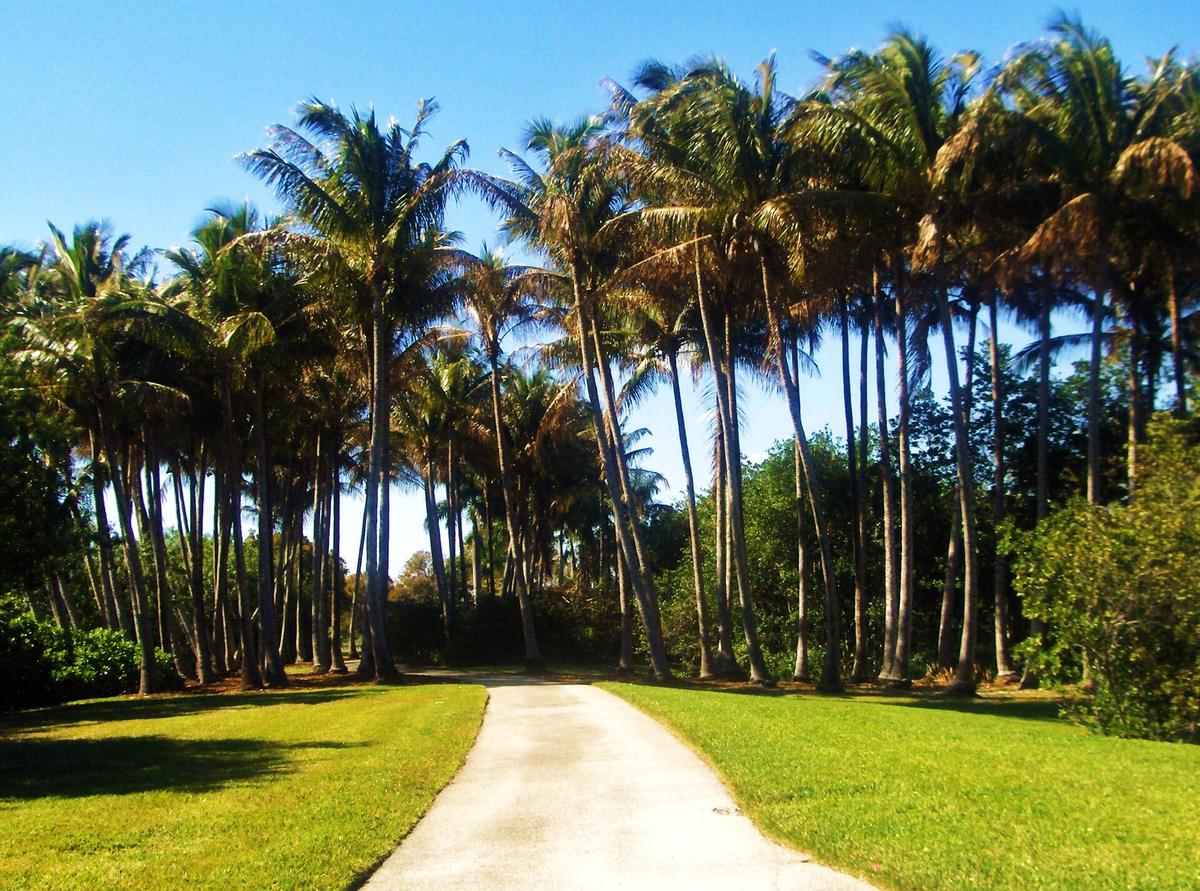

How the two car-free bases differ at a glance
Hollywood Beach and Lauderdale-by-the-Sea sit roughly eight miles apart on the same barrier island north of Fort Lauderdale, yet they offer two distinct versions of a car-free Florida beach stay. One is a broad, bustling city beachfront with a 2.5-mile brick-paved promenade where bicycles have their own lane and motorized vehicles are legally prohibited. The other is a compact seaside town that covers less than a square mile of land, promotes itself as a place where no car is needed, and puts a coral reef within swimming distance of the sand. Choosing between them comes down to what you want within walking distance once you park or arrive.
Both destinations operate on-demand electric shuttles that reduce the need for a private vehicle, and both have invested in wheelchair-accessible beach infrastructure. The differences emerge in scale, atmosphere, and the type of shoreline activity each prioritizes. Hollywood Beach delivers a classic oceanfront boardwalk experience with designated cycling, fixed-route community shuttles, and connections to a larger downtown. Lauderdale-by-the-Sea offers a quieter, more contained setting where the town itself is the amenity and the underwater attractions sit remarkably close to shore.
The Broadwalk and the beachfront experience in Hollywood
Hollywood Beach organizes its oceanfront life around the Broadwalk, a 2.5-mile promenade surfaced in brick where motorized vehicles are prohibited by city ordinance. The Broadwalk includes a designated bicycle path, and the city code restricts bicycling to that path while banning skateboarding entirely from the promenade. This creates a predictable separation between foot traffic and wheels, which can matter if you are traveling with young children or prefer a walk where the pace feels regulated.
The beach itself is served by eight access points with mats that provide wheelchair access to the sand, located at Carolina, Connecticut, Johnson, New York, Tyler, Harrison, and Oregon Streets, plus a point between Iris Terrace and Magnolia Terrace. If beach accessibility is a deciding factor, the number and distribution of these entry points means you are rarely far from a mat-equipped ramp, regardless of where you stay along the Broadwalk.
Editorially, Hollywood Beach suits visitors who want a lively, linear beachfront with clear rules about where bikes belong and where they do not. The Broadwalk feels like a destination in itself rather than simply a route to the sand. The tradeoff is that the city of Hollywood covers roughly 27.3 square miles with an estimated population of 157,019, so the beachfront sits within a larger urban fabric. You are never truly in a self-contained village, which means some errands or dining options may pull you beyond walking distance of the barrier island.
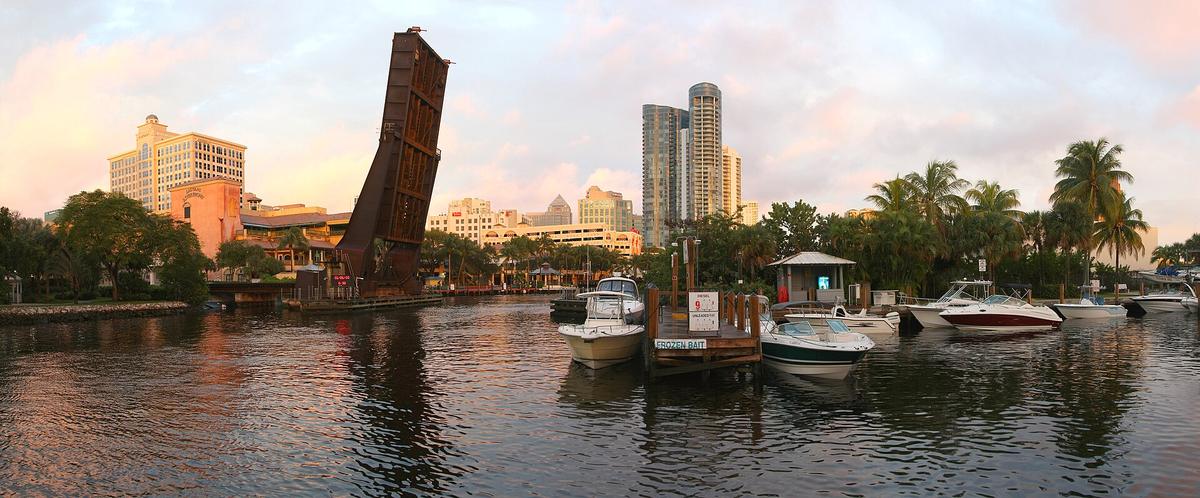

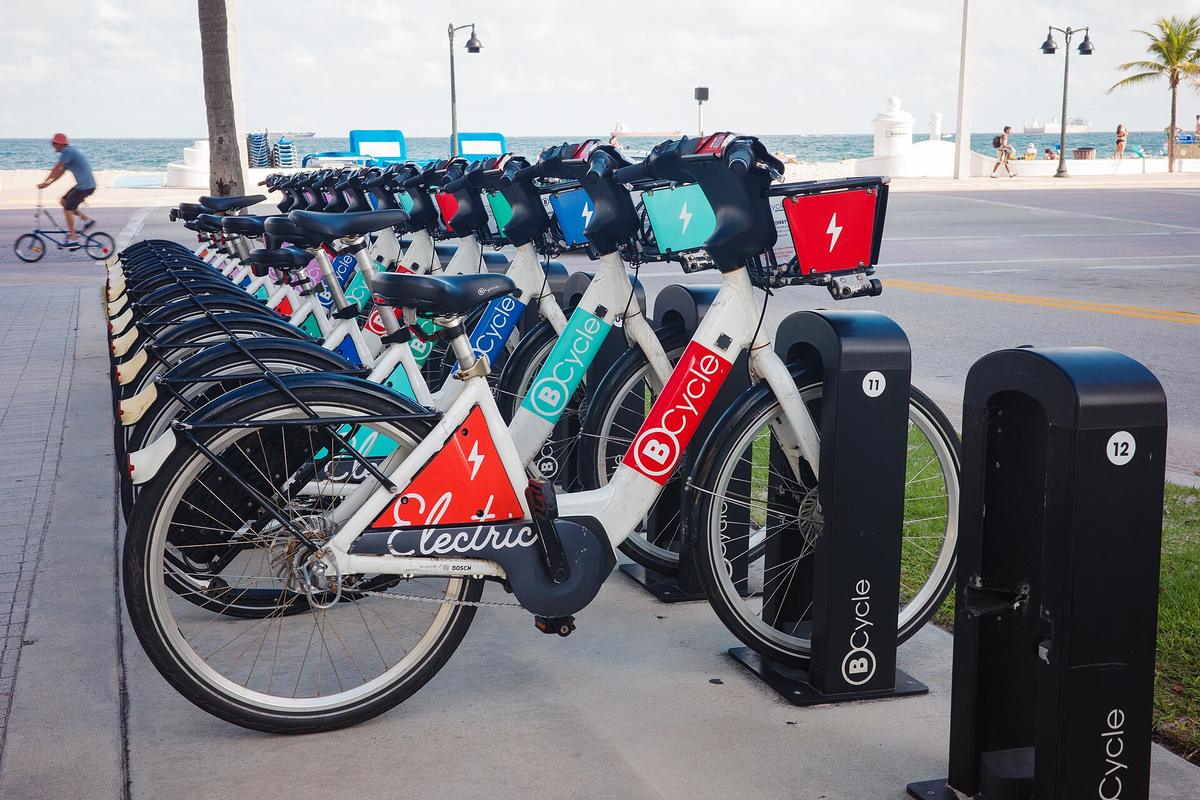

Getting around without a car in Hollywood
Hollywood operates two shuttle services that support a car-free visit. The Sun Shuttle is an on-demand electric shuttle serving the barrier island and connecting to Downtown Hollywood, with a fare of $2 per person per ride. The city also runs the free Holly-Go Community Shuttle on fixed routes citywide, including a Park and Ride service from City Hall to the beach on Fridays through Sundays. Together, these services create a network that links the beach to the broader city without requiring a private vehicle.
Before relying on the Sun Shuttle for a specific itinerary, check its current operating hours and exact zone boundaries directly with the City of Hollywood through its Transit Options page. The service area and schedule can shift, and the research available at the time of writing does not include a verified timetable. The same caution applies to parking costs if you plan to leave a car at a garage or metered space near the beach; verify current rates through the City of Hollywood Beach Parking Map, as fees are subject to change.
The practical recommendation is to treat Hollywood as a car-free base where you can comfortably spend several days on the barrier island using the Broadwalk, the shuttles, and your own two feet, but where a trip into Downtown Hollywood or beyond may require consulting a live schedule. The free weekend Park and Ride from City Hall offers a way to avoid beachfront parking altogether if you are arriving from outside the area.
Lauderdale-by-the-Sea and the everything-in-walking-distance promise
Lauderdale-by-the-Sea is a town of approximately 0.88 square miles of land with an estimated population of 6,280, situated entirely on a barrier island between the Atlantic Ocean and the Intracoastal Waterway. The official tourism site promotes the town as a place where no car is needed, noting that all shops, restaurants, and the beach sit within a few blocks' walk and that the town stretches only a few blocks wide. This is not a marketing exaggeration built around a single strip; the geography itself enforces compactness because the town is bounded by water on both sides.
The beach runs for 2.5 miles, and the town maintains multiple named beach portals with showers, benches, and chairs. The Datura Avenue portal is equipped with a wooden dive bench and tank rack, a detail that signals how central shore diving is to the local identity. If your ideal car-free beach day involves walking from your lodging to a portal, rinsing off under a shower, and sitting on a provided bench without hauling gear across a sprawling parking lot, Lauderdale-by-the-Sea is built around that exact rhythm.
The tradeoff is scale. A town of less than one square mile cannot offer the variety of a larger city. You are choosing containment and walkability over breadth. For a short stay where the goal is to park once and forget the car, that containment is an asset. For a longer trip where you might want to explore multiple neighborhoods, the town's small size could feel limiting, though the on-demand shuttle extends the range modestly.
Shore diving and snorkeling that sets Lauderdale-by-the-Sea apart
Lauderdale-by-the-Sea calls itself Florida's Beach Diving Capital, and the underwater access supports the title. The coral reefs lie within 100 yards of the beach, which means a competent swimmer can reach living reef without a boat. The Shipwreck Snorkel Trail off Datura Avenue sits in approximately 10 feet of water and features an anchor, five concrete cannons, and a ballast pile, creating a shallow, deliberate underwater route that is rare for a mainland beach.
Less than a mile offshore, the SS Copenhagen rests in 25 feet of water. This 19th-century British steamship wrecked in May 1900 and is now a Florida Underwater Archaeological Preserve listed on the National Register of Historic Places. The wreck is reachable by boat, and its proximity to shore makes it a realistic objective for divers operating out of the town.
Hollywood Beach does not have a comparable shore-accessible reef or wreck trail identified in the verified research. If snorkeling or diving directly from the beach is a priority, the choice tilts decisively toward Lauderdale-by-the-Sea. The Datura Avenue portal, with its dive bench and tank rack, is designed to support exactly this activity. Visitors who do not dive or snorkel will still notice the difference in beach culture; the presence of dive infrastructure shapes the town's character in a way that the Broadwalk's cycling lane shapes Hollywood's.
Getting around without a car in Lauderdale-by-the-Sea
The town operates Circuit-By-The-Sea, a fully electric on-demand shuttle serving Lauderdale-by-the-Sea, Galt Ocean Mile, and Coral Ridge Mall at a fare of $2 per rider. Wheelchair-accessible vehicles are available. The service extends the walkable core to include a shopping center and a neighboring oceanfront district, which broadens the practical range of a car-free stay without requiring a fixed route or a timetable.
As with any on-demand service, operating hours and the exact fare structure can change. Verify the current schedule and pricing directly with the Town of Lauderdale-By-The-Sea through its Circuit-By-The-Sea page before building a tight itinerary around the shuttle. The research available at the time of writing confirms the existence of the service, the fare, the electric fleet, and the wheelchair accessibility, but not the hours of operation.
The town's geography does much of the work that a shuttle network would do in a larger city. Because the entire municipality sits on a barrier island only a few blocks wide, walking from one side to the other is measured in minutes rather than miles. The shuttle is best understood as a tool for reaching the mall or Galt Ocean Mile, not as a daily necessity for getting to the beach or dinner.
How to decide between the two
The decision rests on a few clear comparisons drawn from the verified facts. Hollywood Beach gives you a 2.5-mile brick promenade with a designated bike lane, eight wheelchair-accessible beach entry points, two shuttle services including a free weekend Park and Ride, and a connection to a city of over 150,000 people. Lauderdale-by-the-Sea gives you a self-contained town of roughly 6,200 residents on less than a square mile of land, a beach of equal length, shore-accessible coral reefs within 100 yards, a shipwreck trail in 10 feet of water, and a nationally listed historic wreck less than a mile offshore.
Choose Hollywood Beach if you want a broad, active promenade with clear cycling infrastructure, multiple transit links to a larger downtown, and a higher density of wheelchair-accessible beach entry points spread along the shore. Choose Lauderdale-by-the-Sea if your priority is a compact, walkable town where the reef and wreck are the main attraction and the beach portals are set up for divers. Both places have an electric on-demand shuttle at the same fare, so the transit baseline is comparable even though the scale of each destination differs sharply.
If you are traveling with someone who uses a wheelchair, Hollywood Beach provides documented mat access at eight named street locations. Lauderdale-by-the-Sea offers wheelchair-accessible shuttles, but the verified research does not specify the number or location of beach access mats in the town. That absence of data is worth weighing if sand access is a requirement rather than a preference. Contact the Town of Lauderdale-By-The-Sea directly to confirm current beach wheelchair access before booking.
Sources and verification
- codelibrary.amlegal.com — Research source checked for this guide
- codelibrary.amlegal.com — Research source checked for this guide
- hollywoodfl.org — Research source checked for this guide
- hollywoodfl.org — Research source checked for this guide
- census.gov — Research source checked for this guide
- census.gov — Research source checked for this guide
Read next
-
 Fort Lauderdale Hotels Beach Towers Boutique Stays and Marina Resorts
Fort Lauderdale hotels range from A1A beach towers to Intracoastal marina resorts and Wilton Manors guesthouses. Here is which category fits your trip and what each costs.
-
 Where to Stay in Fort Lauderdale Beach Las Olas Wilton Manors and Beyond
Where you stay in Fort Lauderdale defines your entire trip. Compare the beach strip, Las Olas, Wilton Manors, and the inland options that look close on a map but are not.
-
 Flying to Fort Lauderdale and Why FLL Beats MIA for the Beach
FLL puts you 15 minutes from the Fort Lauderdale beach for a $25 ride. MIA is a backup option with a longer drive north. Here is how to choose and what the fare gap really buys you.
-
 Things to Do in Fort Lauderdale Waterways Arts and Everglades Edge
Fort Lauderdale is built around its waterways, arts warehouses, and proximity to the Everglades. Here is a three-day plan that connects the city beyond the beach.
-
 Best Time to Visit Fort Lauderdale and When to Stay Away
Fort Lauderdale shines December through April, but sargassum seaweed, humidity, and the Boat Show price spike make other months a gamble. Here is when to book and when to avoid.
-
 Getting Around Fort Lauderdale Without Wasting Afternoon Parking Fees
From the scenic Water Taxi and unreliable Sun Trolley to ride-hailing dominance and drawbridge traps, here is how getting around Fort Lauderdale actually works.
-
 The Everglades
Compare Everglades Holiday Park airboats and Shark Valley's tram loop for a day trip from Fort Lauderdale, with honest drive times and what to expect.
-
 Broward Center for the Performing Arts
Navigate the Broward Center's theaters, parking, and Broadway season so a show night in downtown Fort Lauderdale goes smoothly.
-
 Flamingo Gardens
 in Davie combines a botanical sanctuary of champion trees with a wildlife refuge and a narrated tram ride west of Fort Lauderdale.